Retail Shops & Art Galleries: The Ultimate Cleaning Strategy for First Impressions
Retail & Galleries · Downtown Los Angeles · · 5 min read

Why do retail shops in DTLA need specialized cleaning services?
DTLA retail shops need specialized cleaning because heavy foot traffic brings grit indoors, display glass shows fingerprints quickly, and floor finishes require compatible products. Galleries also need no-touch exhibit boundaries. After-hours service should include controlled key access and documented lock-up. Tailor frequency to customer traffic, events and the property's security rules.
- Foot traffic introduces abrasive grit and recurring entrance debris.
- Storefront glass and mirrors make streaks and fingerprints highly visible.
- Concrete, stone and hardwood need finish-compatible maintenance.
- Inventory and exhibits require no-touch boundaries and secure keyholder procedures.
The storefront window is often a visitor's first view of a DTLA shop or gallery. Fingerprints, dust and worn-looking floors can distract from the products or exhibition before anyone reaches the front desk. A presentation-focused cleaning plan combines frequent entrance maintenance with surface-specific floor care and careful access rules. It should protect the space, not merely make it look clean for one opening.
Storefront display windows: clean glass without damaging film
Inspect glass in daylight and under the store's evening lighting. Use a compatible cleaner, a clean microfiber cloth to remove fingerprints, and a separate dry cloth to finish. Check care instructions for security film, tint and coated glass. Apply cleaner to the cloth when adjacent inventory or electrical fixtures could be affected. Exterior upper-story glass requires separate access and safety planning; it is not automatically included in ordinary storefront work.
Polished concrete and hardwood floor care in DTLA
Identify the actual finish before choosing a product. Sealed or polished concrete, engineered wood and natural stone are different systems. Ask for the installer's or manufacturer's maintenance guide and test uncertain treatments in an inconspicuous location with permission. Dry-remove grit before damp cleaning; grit dragged across a floor can scratch the finish.
- Maintain entrance mats and clean the flooring beneath them.
- Use a compatible neutral cleaner where specified, with minimal standing moisture.
- Avoid abrasive pads, aggressive degreasers and unapproved wax on polished concrete.
- For wood floors, avoid soaking and confirm any polish or coating is approved.
- Schedule restorative floor work separately from daily maintenance.
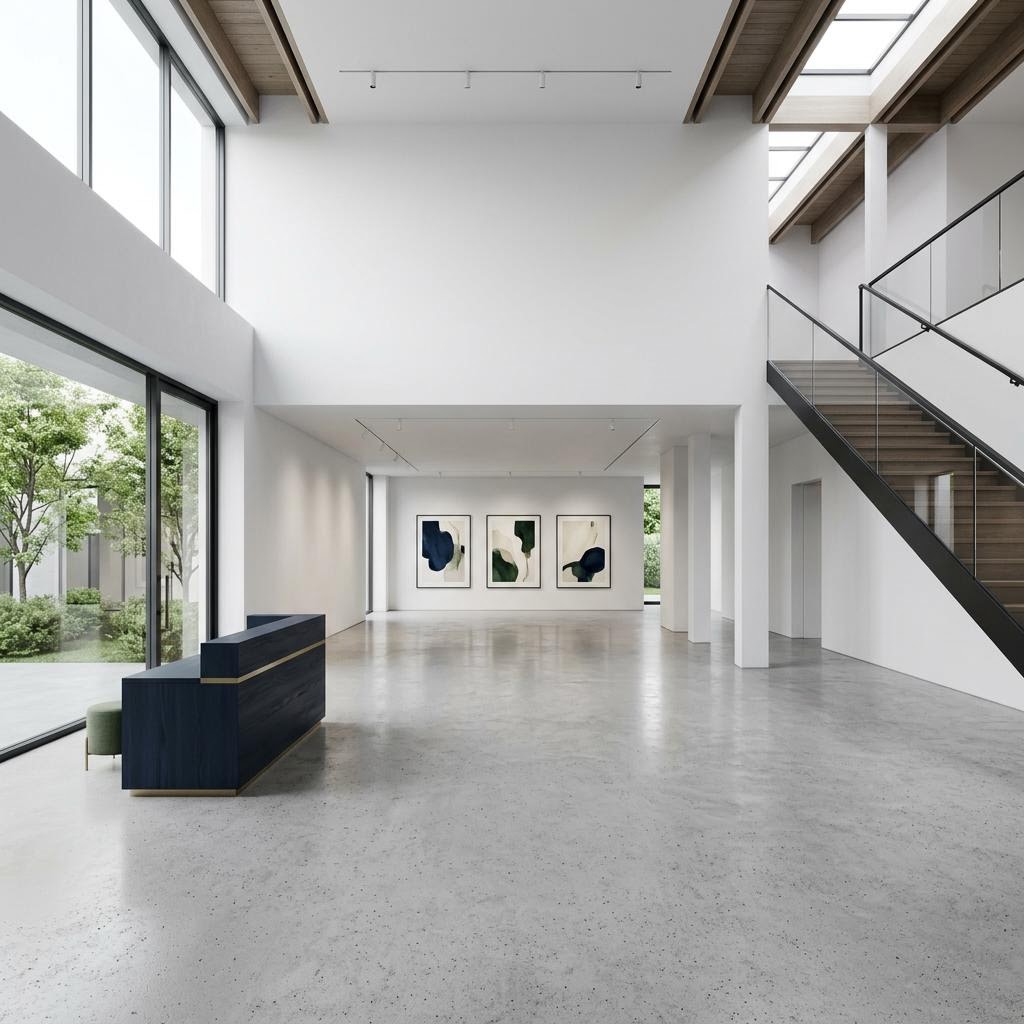
Dust-free artwork presentation starts with no-touch boundaries
An artwork's conservation requirements are not the same as ordinary furniture care. Mark paintings, sculpture, display mounts and pedestals that the crew must not touch. Cleaning artwork, moving pieces or applying chemicals near fragile objects should only happen under direction from the gallery's qualified staff. Use controlled dust collection and avoid blowing loose dust toward exhibits.
Accessible lighting exteriors and window ledges can collect dust, but high fixtures need safe access, suitable equipment and a separate scope where necessary. Never climb on display furniture. Agree on what may be moved, what stays in place and where approved supplies are stored.
Night keyholder security for shops and galleries
A secure program uses authorized staff, a key or badge log, documented alarm instructions and a named escalation contact. Verify insurance and any bonding claims rather than assuming every provider's crew is bonded. Do not write alarm codes on visible cleaning checklists or share them through group chats. Record the final door check and communicate unexpected access problems immediately.
Adjust cleaning around events and busy retail periods
A gallery opening or sale can create several days' worth of foot traffic in one evening. Book the reset before the event, identify the expected debris and reserve a drying window before reopening. During routine weeks, use documented inspection feedback to adjust entrance glass and floor frequency instead of repeatedly paying for an unspecified 'deep clean.'
Key takeaways
- Treat entrance glass and floor grit as recurring presentation priorities.
- Match chemistry and moisture levels to the actual floor finish.
- Keep artwork and sensitive displays outside routine touch zones.
- Verify staff authorization, insurance and bonding when relevant.
- Plan event resets and final lock-up before service begins.
Frequently asked questions
Why do retail shops in DTLA need specialized cleaning services?
DTLA retail shops need specialized cleaning because heavy foot traffic brings grit indoors, display glass shows fingerprints quickly, and floor finishes require compatible products. Galleries also need no-touch exhibit boundaries. After-hours service should include controlled key access and documented lock-up. Tailor frequency to customer traffic, events and the property's security rules.
Can a cleaning crew dust artwork?
Not as part of ordinary janitorial service. Artwork should be a no-touch area unless qualified gallery staff explicitly authorize an appropriate method. Routine crews can maintain approved surrounding surfaces without handling the artwork.
Should polished concrete floors be waxed?
Not automatically. Many polished concrete systems should not receive ordinary floor wax. Confirm the floor system and the manufacturer's maintenance guide before applying any coating or restorative treatment.
How do I arrange safe evening access?
Use authorized keys or badges, a controlled access log, documented alarm procedures and a final lock-up check. Ask the provider to explain its staffing and incident-reporting process and verify any insurance or bonding claim.
Make every guest impression count
Schedule your flexible retail floor care evaluation today.
Request a Floor Care EvaluationRequest a proposal
Serving Greater Los Angeles and Downtown Los Angeles (DTLA). Orange County inquiries are welcome.
Call (562) 212-5689 or text our business number. The interactive inquiry form loads with JavaScript.
Request a proposal online