Creative Office & Co-Working Night Cleaning: Operational Excellence After Hours
Creative Offices · Downtown Los Angeles · · 5 min read
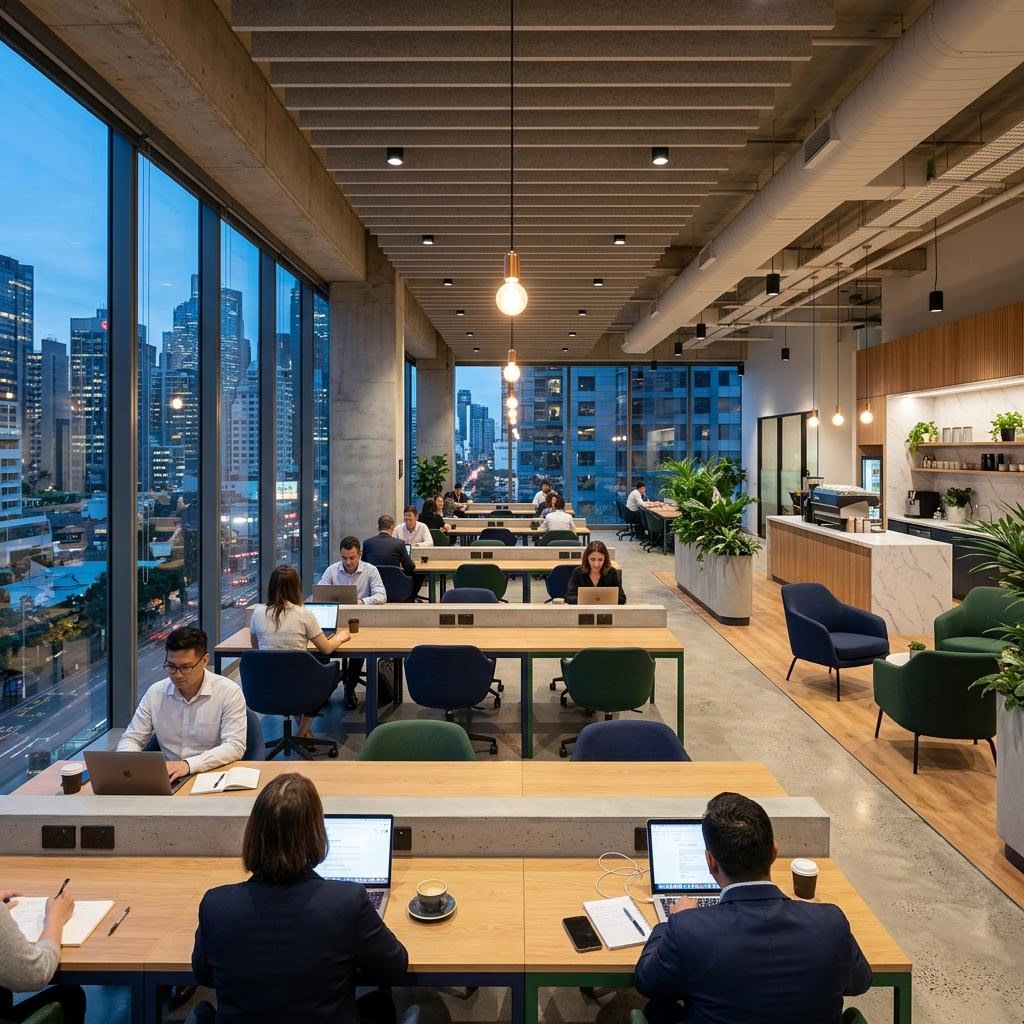
What hours do night janitorial crews operate in DTLA creative offices?
A typical planned night-cleaning window for DTLA creative offices is 8 PM–4 AM, adjusted to member access, building rules and the agreed scope. Crews may begin with quiet tasks around occupied areas, clean desks and kitchens after users leave, then complete floor work and lock-up. This is an example schedule, not guaranteed True Clean availability.
- 8–10 PM: entry check, waste removal and quiet cleaning in available areas.
- 10 PM–midnight: approved desks, meeting rooms and shared touchpoints.
- Midnight–2 AM: kitchens, restrooms and floor care as occupancy allows.
- 2–4 AM: finish, drying checks, inspection and documented secure exit.
Coworking spaces serve different users across the same desks, meeting rooms and kitchens. A tidy desk at noon can be covered with crumbs and fingerprints by evening, while coffee bars and waste stations become shared maintenance problems. Night cleaning lets operators restore the environment without vacuuming through a client call. The program still needs clear rules for late-working members, electronics, personal property and secure access.
Hot-desks need a clear-desk policy before night cleaning
Shared desks are only fully cleanable when they are available. Ask members to remove personal items and define which surfaces the crew may touch. A janitorial team should not rearrange documents, open lockers or unplug equipment. Mark private offices and restricted work areas clearly. Use approved products for desktop finishes and follow device care instructions for shared keyboards and meeting-room controls.
Separate cleaning from disinfection: remove visible soil before applying an appropriate disinfectant where the scope requires it. Respect label contact times and allow equipment surfaces to dry. Use clean cloths across zones instead of carrying a kitchen cloth to a keyboard or a restroom cloth to a meeting table.
Communal kitchens and espresso bars: remove residue, not just waste
Coffee grounds, milk spills and food residue can quickly create odors in a shared kitchen. A nightly scope should identify counters, sinks, handles, tables, waste stations and accessible appliance exteriors. Clean food-contact surfaces using products and any rinse steps appropriate to those surfaces. Avoid mixing chemicals or leaving disinfectant residue where food is prepared.
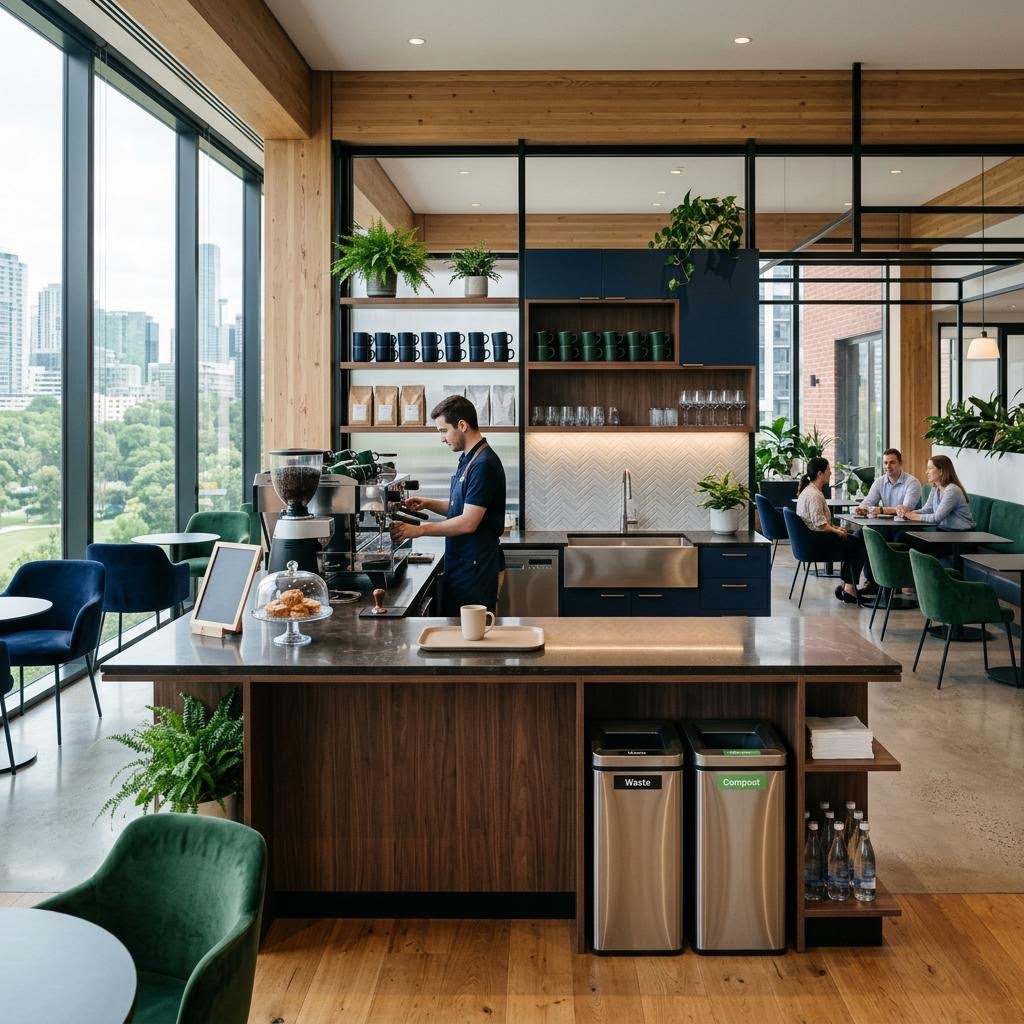
An espresso machine's internal cleaning and descaling procedures belong to the equipment's trained operator unless separately assigned. The same applies to interior refrigerator contents and member-owned containers. Define permissions and exclusions to avoid discarded food, damaged equipment or a cleaning visit that leaves the most-used areas untouched.
An illustrative 8 PM–4 AM DTLA cleaning shift
- 8–10 PM: check in, confirm occupied areas and collect approved waste without disturbing late workers.
- 10 PM–midnight: service vacated hot-desks, meeting rooms and shared high-touch surfaces.
- Midnight–2 AM: clean kitchen and restroom zones; complete noisy or wet floor tasks when permitted.
- 2–4 AM: confirm floors are safe, inspect the agreed areas, report issues and perform lock-up.
This breakdown is a planning example, not a minimum eight-hour service requirement or a promise of a specific slot. A smaller hub may need a much shorter visit. Twenty-four-hour workspaces require a rotating-zone plan rather than an assumption that the entire building will be empty. Confirm member notification, wet-floor routes and noise restrictions during scheduling.
Keycard and alarm security: document every handover
Issue authorized credentials under the building's policy and record who holds them. Avoid shared codes where individual credentials are available. The scope should cover entry confirmation, doors that must remain closed, alarm activation and a contact for failed access. Crews should never prop secure doors open or admit an unknown person simply because that person says they are a member.
Build a nightly program around how your community actually works
Start with occupancy patterns, kitchen use, restroom traffic and cleaning priorities. Separate nightly tasks from periodic carpet extraction or restorative floor work. Ask for task frequencies, supply responsibilities and inspection feedback in the proposal. Adjust the schedule after busy events or membership changes rather than treating every night as identical.
Key takeaways
- A clear-desk policy makes shared stations accessible for cleaning.
- Distinguish kitchen surfaces from appliance servicing and personal property.
- Use 8 PM–4 AM only as an illustrative scheduling window.
- Plan rotating zones for members who work overnight.
- Document credentials, alarm procedures and final lock-up.
Frequently asked questions
What hours do night janitorial crews operate in DTLA creative offices?
A typical planned night-cleaning window for DTLA creative offices is 8 PM–4 AM, adjusted to member access, building rules and the agreed scope. Crews may begin with quiet tasks around occupied areas, clean desks and kitchens after users leave, then complete floor work and lock-up. This is an example schedule, not guaranteed True Clean availability.
Can cleaning be scheduled around members working late?
Yes, the scope can define quiet tasks, temporary exclusions and a rotating-zone approach. Confirm the building's access rules and a contact who can resolve conflicts. Actual scheduling and availability must be agreed with the provider.
Will the crew clean shared keyboards and electronics?
Only within an approved scope using manufacturer-compatible methods. The crew should not spray liquid directly into devices, unplug equipment or access private information.
Does a coworking space need an eight-hour cleaning shift?
Not necessarily. The 8 PM–4 AM breakdown is an example overnight window. Required labor depends on footprint, occupancy, bathrooms, kitchen use and the tasks agreed in the proposal.
Keep your co-working community thriving
Request a customized after-hours cleaning program for your DTLA workspace.
Request a Night Cleaning ProgramRequest a proposal
Serving Greater Los Angeles and Downtown Los Angeles (DTLA). Orange County inquiries are welcome.
Call (562) 212-5689 or text our business number. The interactive inquiry form loads with JavaScript.
Request a proposal online