Creative Office Cleaning in the Arts District: What Standard Janitorial Programs Get Wrong
Specialty Cleaning · Arts District, DTLA · · 7 min read
What special cleaning considerations apply to creative office spaces?
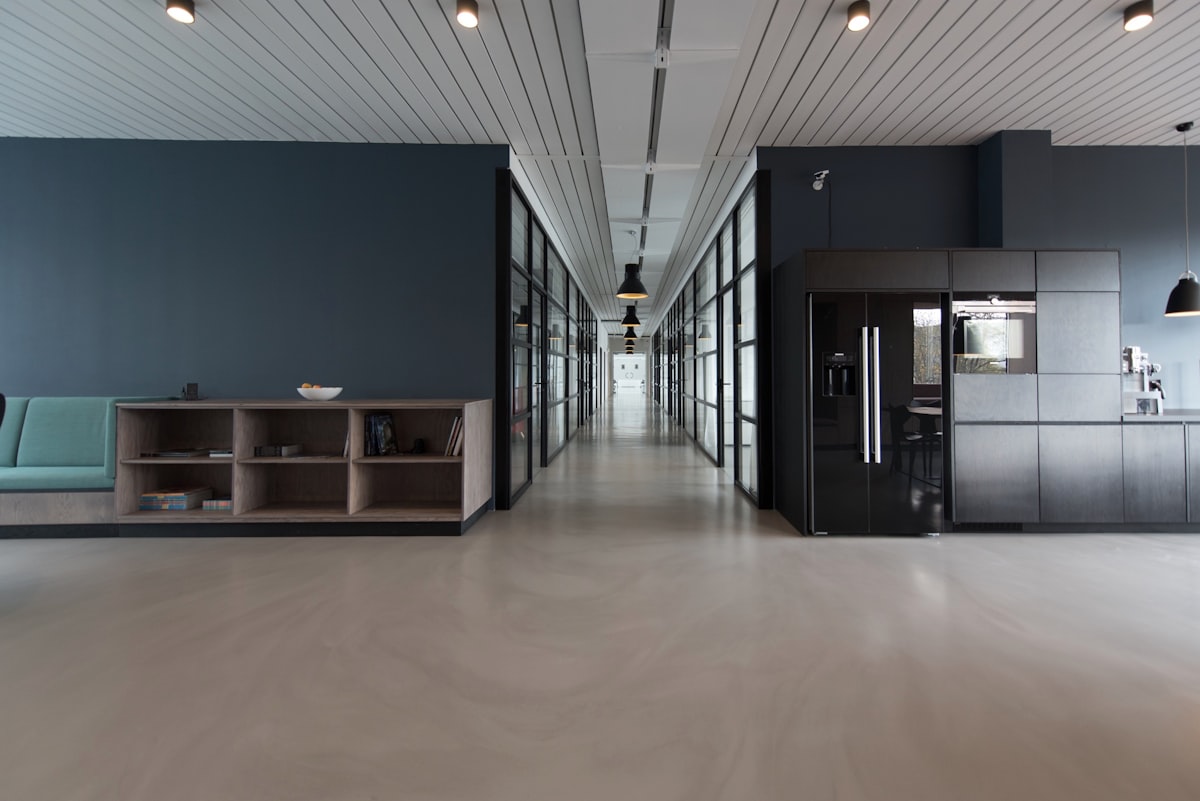
Creative offices with exposed concrete, raw steel, glass partition systems, reclaimed wood, and terrazzo require surface-specific chemistry and techniques that standard commercial cleaning programs are not designed to provide. Polished concrete requires pH-neutral, no-rinse cleaners; glass partitions require non-ammoniated chemistry and squeegee technique; raw steel requires oil-based protectants rather than aqueous cleaners. A surface inventory and specialized protocol specification are essential before cleaning work begins.
The Arts District creative office market has matured significantly in the past decade, with former industrial warehouses in DTLA's eastern corridor now commanding premium rents from design studios, advertising agencies, tech firms, and media companies. These spaces share a common aesthetic — exposed concrete, raw steel, glass partition systems, and open collaboration zones — and a common cleaning problem: standard commercial janitorial programs are built for drop-ceiling office environments, not adaptive reuse creative workspaces. The wrong chemistry on polished concrete leaves residue. The wrong technique on raw steel accelerates oxidation. And general-purpose mops on terrazzo strip the sealer that took the landlord $40 per square foot to apply.
Surface Inventory: The First Step in Creative Office Cleaning
Before a cleaning program is specified for an Arts District creative office, a surface inventory must be conducted. Unlike traditional offices, where floor and wall surfaces are relatively uniform, adaptive-reuse creative offices often contain 8–12 distinct surface types within a single floor plate — each requiring a different chemistry, tool, and technique. Skipping this step and applying a standard commercial cleaning protocol is the primary source of surface damage claims in the Arts District creative office market.
- Polished concrete (sealed): pH-neutral, no-rinse cleaner only — no alkaline strippers, no acidic degreasers
- Exposed concrete (unsealed): dry-dust first, then minimal moisture application with neutral chemistry
- Raw steel and blackened metal fixtures: microfiber wipe with food-safe oil-based protectant — never aqueous cleaners
- Glass partition systems: non-ammoniated glass cleaner, microfiber application — squeegee for floor-to-ceiling panels
- Brick and reclaimed wood: dry dusting and periodic penetrating sealer — no steam or wet-mopping
- Terrazzo (common in 1920s–1940s industrial conversions): neutral pH stone cleaner, diamond-pad maintenance
- Polished concrete with epoxy coating: manufacturer-specified cleaner only — epoxy coatings are not acid-resistant
The Problem with Standard Alkaline Floor Cleaners in Creative Offices
Standard commercial floor cleaners are typically formulated at a pH of 8–11 to cut through heavy grease and soil loads in high-traffic environments. In Arts District creative offices with polished or sealed concrete floors, these alkaline products strip the penetrating sealer, leave white residue, and dull the surface over time. Facility managers who notice a progressive haze or residue on polished concrete floors — despite regular cleaning — are almost invariably seeing the cumulative result of incorrect chemistry being used by a janitorial crew that hasn't been briefed on surface type.
Glass Partition Systems: The Daily Standard That Matters Most
Floor-to-ceiling glass partition systems are the defining architectural feature of most Arts District creative offices — and the most visible indicator of cleaning quality. A smeared glass wall visible from the street or a client-facing conference room is an immediate credibility problem for the tenant. Standard janitorial glass cleaning using spray-and-wipe with paper towels is not sufficient for large-format glass panel systems. These surfaces require squeegee technique for streak-free results, non-ammoniated chemistry to protect any low-E or UV-filtering coatings, and a daily maintenance protocol independent of the full janitorial cycle.
- Non-ammoniated glass cleaner protects low-E coatings, tinting, and UV film on partition systems
- Squeegee technique required for panels over 4 feet in width — spray-and-wipe creates streaking at scale
- Daily glass protocol should be a line item in the janitorial contract — not assumed under 'general cleaning'
- Interior glass at entry points and conference rooms should be checked and polished by the day porter at minimum twice per shift
Minimal-Footprint Scheduling for Creative Office Tenants
Many Arts District creative tenants operate non-traditional hours — late evenings, weekends, and irregular shifts. A standard 10 PM – 2 AM nighttime janitorial window may intersect with active tenant operations. True Clean Custodial Services coordinates directly with creative office tenants to establish minimal-footprint cleaning schedules that respect working hours, protect expensive equipment, and avoid disruption to event productions and late-night creative sessions.
Key takeaways
- A surface inventory is mandatory before any cleaning program is specified for Arts District creative offices
- Alkaline commercial floor cleaners damage polished and sealed concrete — specify pH-neutral, no-rinse chemistry
- Glass partition systems require non-ammoniated chemistry and squeegee technique at scale
- Raw steel and blackened metal fixtures require oil-based protectants, not water-based cleaners
- Flexible, minimal-footprint scheduling is essential for creative tenants with non-traditional operating hours
Frequently asked questions
What special cleaning considerations apply to creative office spaces?
Creative offices with exposed concrete, raw steel, glass partition systems, reclaimed wood, and terrazzo require surface-specific chemistry and techniques that standard commercial cleaning programs are not designed to provide. Polished concrete requires pH-neutral, no-rinse cleaners; glass partitions require non-ammoniated chemistry and squeegee technique; raw steel requires oil-based protectants rather than aqueous cleaners. A surface inventory and specialized protocol specification are essential before cleaning work begins.
How do I know if our current cleaning vendor is using the wrong products on our polished concrete?
The earliest visual signs are a milky or cloudy haze on the surface that persists after cleaning, progressive dulling of the polished finish over 3–6 months, or visible residue deposits near expansion joints and transitions. If you observe any of these, request the vendor's SDS documentation for the floor cleaner currently in use and compare the pH to the sealer manufacturer's specifications.
Can exposed brick walls in Arts District creative offices be cleaned?
Yes, but only with dry-dust methods (soft brush or low-velocity blower) and, if necessary, minimal moisture with a neutral pH masonry cleaner. High-moisture cleaning or alkaline chemistry on exposed brick causes efflorescence (white salt deposits) and accelerates mortar degradation. Steam cleaning of brick is generally not recommended without a masonry contractor's review.
Does True Clean Custodial Services service creative office properties in the Arts District?
Yes. True Clean Custodial Services provides specialized janitorial programs for Arts District creative office spaces, including surface-specific protocol development, polished concrete maintenance, glass partition daily care, and tenant-schedule-aligned cleaning windows. Contact us to schedule a surface inventory walk-through and custom proposal.
Request a proposal
Serving Greater Los Angeles and Downtown Los Angeles (DTLA). Orange County inquiries are welcome.
Call (562) 212-5689 or text our business number. The interactive inquiry form loads with JavaScript.
Request a proposal online